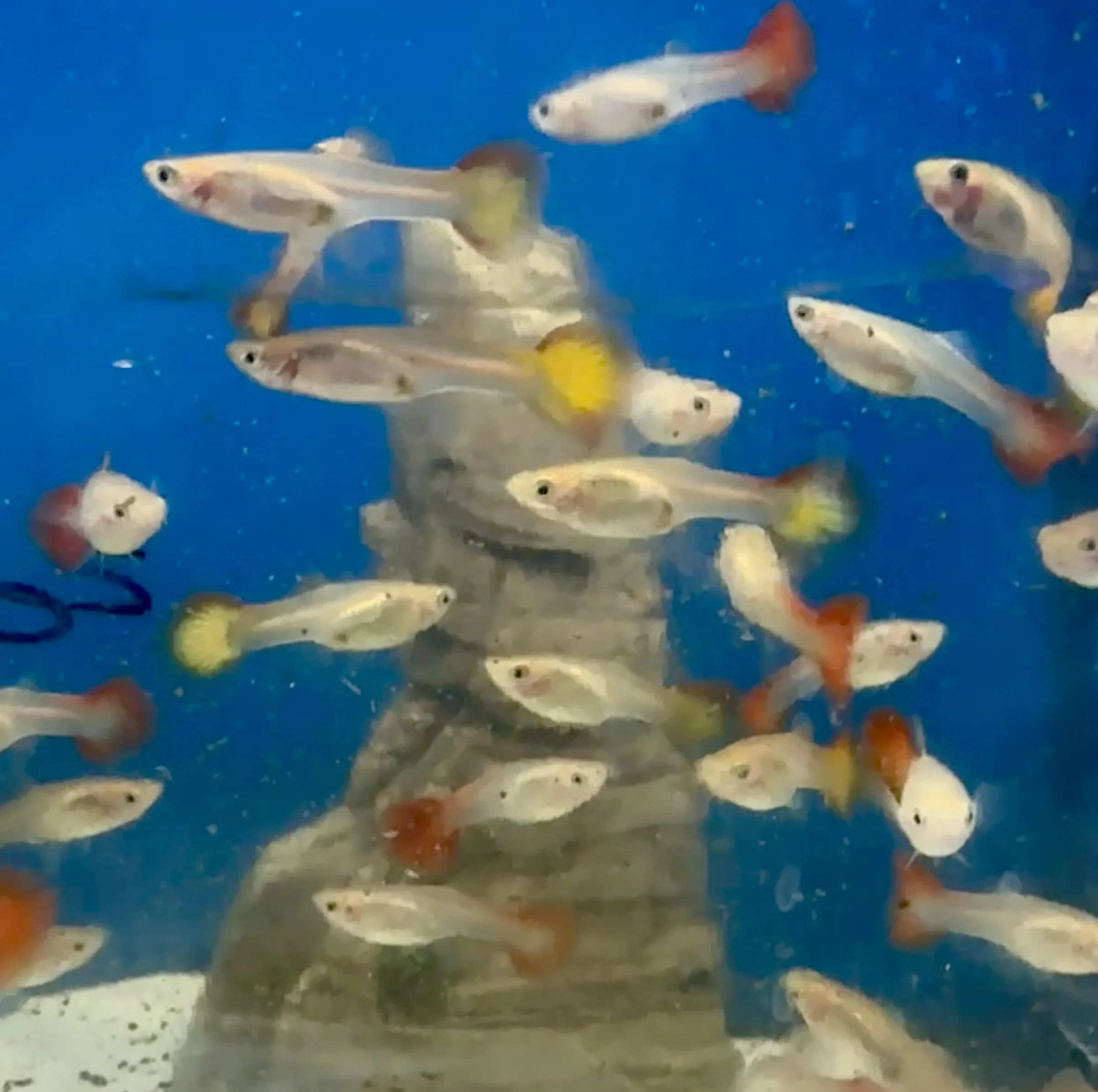
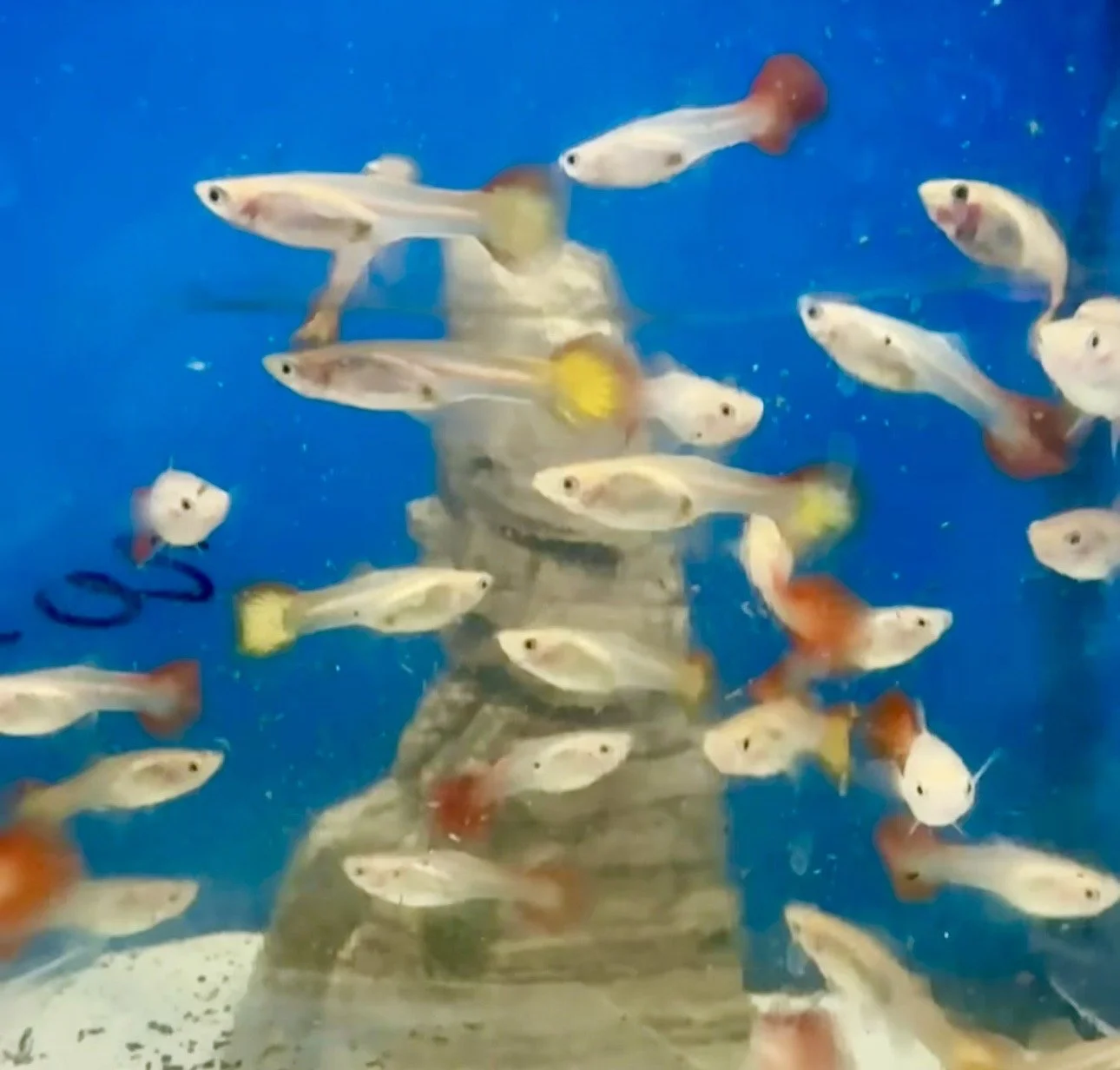
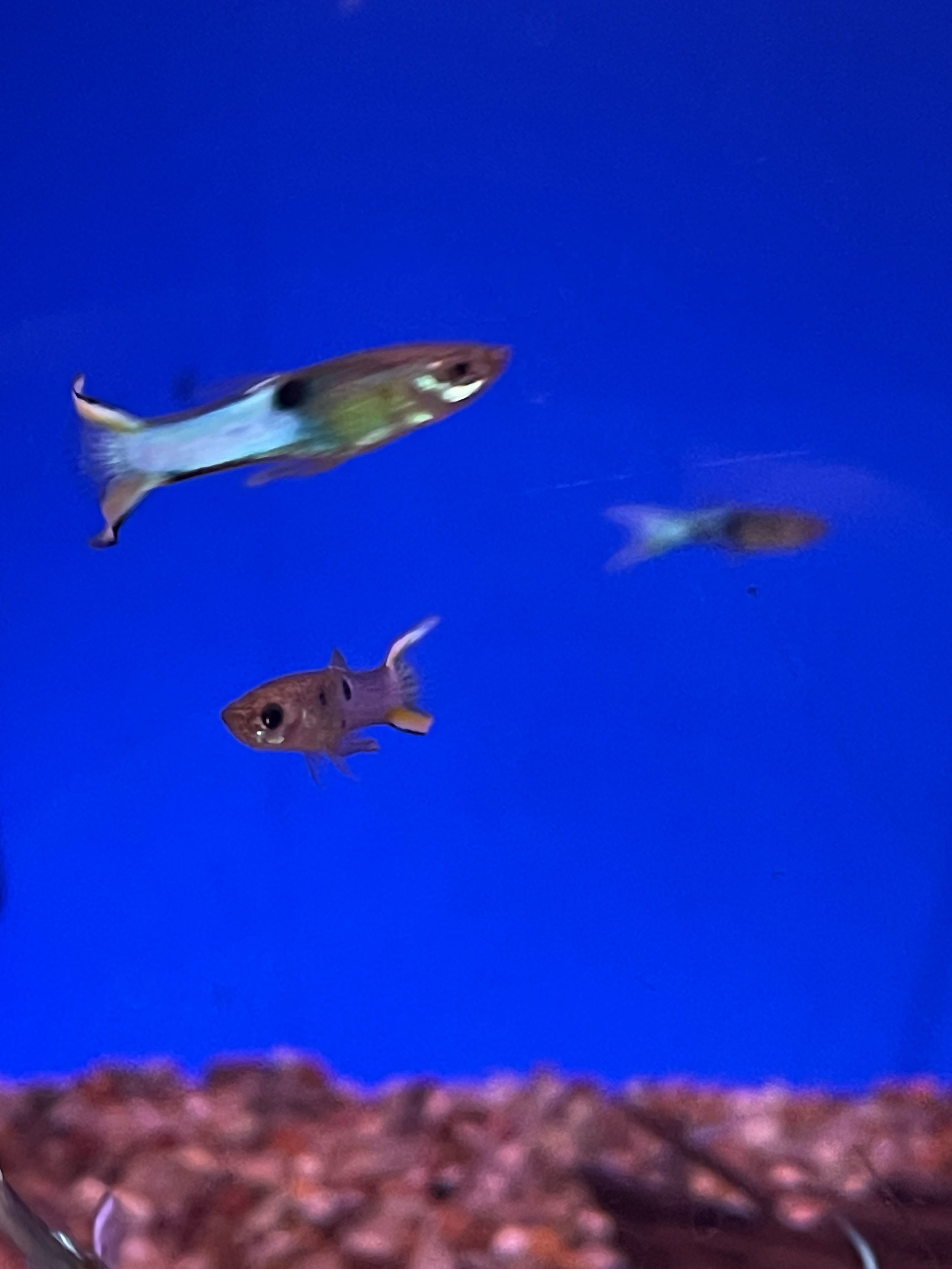
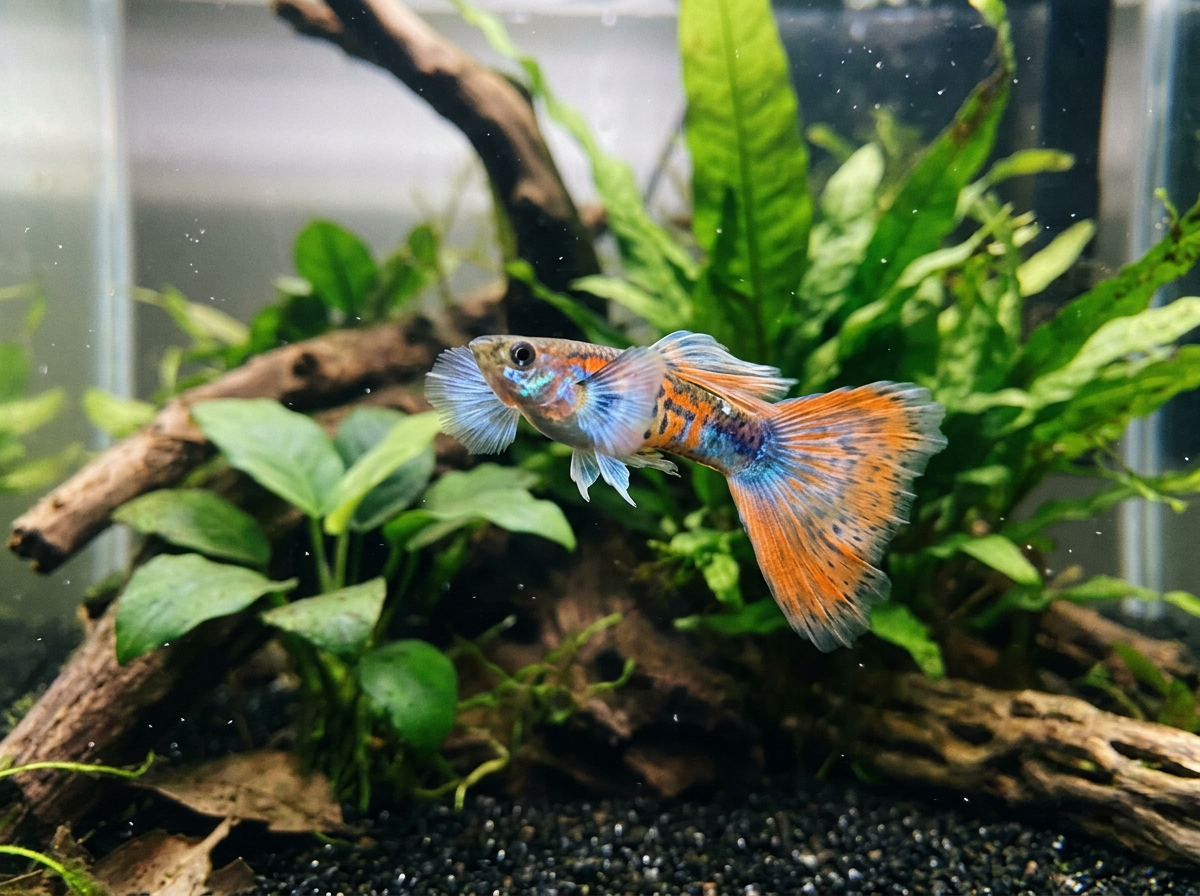
The Poecilia reticulata, universally known as the Guppy or Millions Fish, is arguably the most popular and widely kept freshwater fish in the aquarium hobby, originating from the rivers and streams of northeast South America and several Caribbean islands.
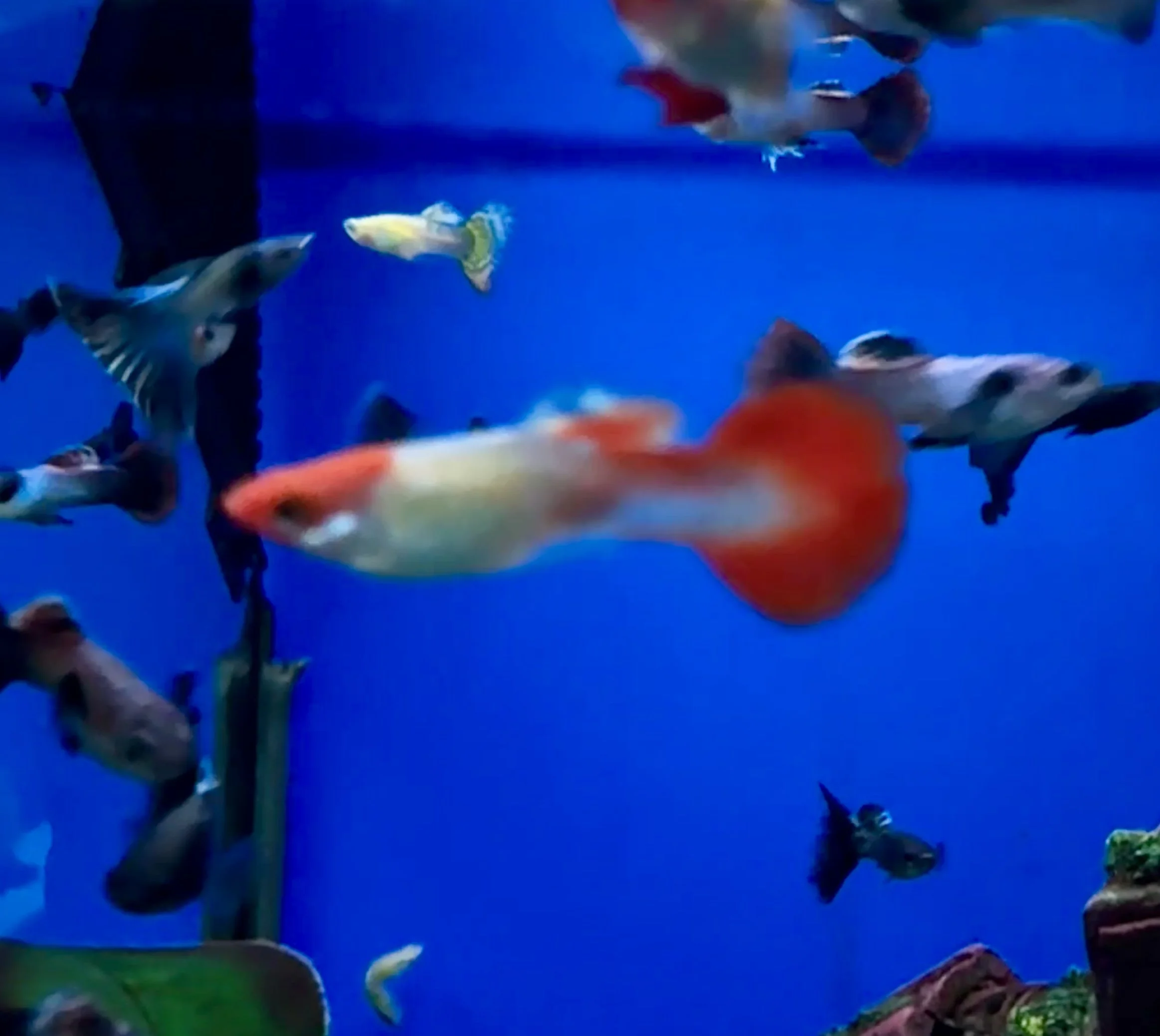
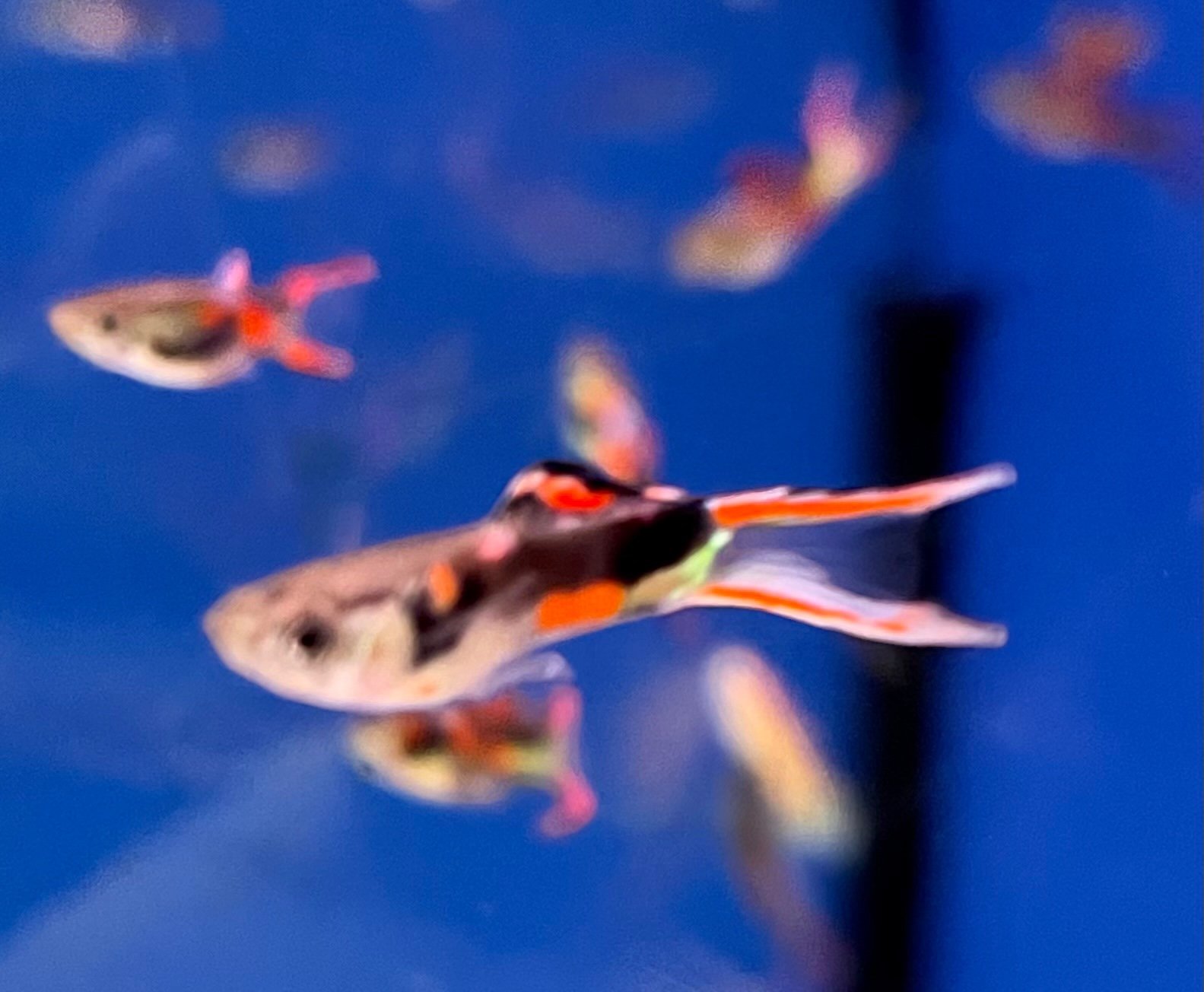
Male guppies are particularly prized for their spectacular colouration and elaborate finnage that has been refined through generations of selective breeding.
Growing to just 3-4 centimetres in length, males display an extraordinary variety of colours including vibrant reds, blues, oranges, yellows, greens, and purples, often in intricate patterns across their bodies and flowing caudal fins.
Popular tail varieties include fantail, delta, lyretail, doublesword, and roundtail, each contributing to their graceful swimming display.
Their small size, active nature, and constant movement throughout all water levels make them captivating residents in any community aquarium.
Male guppies are peaceful and sociable fish that thrive in groups, though they spend much of their time pursuing females for breeding opportunities—it's advisable to maintain a ratio of at least Three females per male to prevent females from becoming stressed by constant attention.
These adaptable fish are compatible with other peaceful, similarly sized species including tetras, Corydoras, platies, and other livebearers.
As prolific livebearers, they can quickly populate an aquarium, with females producing 20-40 fry every 4-6 weeks.
Guppies are omnivorous and undemanding, readily accepting quality flakes or micro-pellets supplemented with occasional treats of frozen bloodworms, brine shrimp, or daphnia.
They appreciate well-planted aquariums with gentle filtration and are remarkably tolerant of varying water parameters, though they prefer neutral to slightly alkaline water with moderate hardness.
With proper care including regular water changes and varied diet, male guppies typically live 2-3 years, making them colourful, active, and beginner-friendly additions perfect for aquarists of all experience levels.
The Poecilia reticulata, universally known as the Guppy or Millions Fish, is arguably the most popular and widely kept freshwater fish in the aquarium hobby, originating from the rivers and streams of northeast South America and several Caribbean islands.
Male guppies are particularly prized for their spectacular colouration and elaborate finnage that has been refined through generations of selective breeding.
Growing to just 3-4 centimetres in length, males display an extraordinary variety of colours including vibrant reds, blues, oranges, yellows, greens, and purples, often in intricate patterns across their bodies and flowing caudal fins.
Popular tail varieties include fantail, delta, lyretail, doublesword, and roundtail, each contributing to their graceful swimming display.
Their small size, active nature, and constant movement throughout all water levels make them captivating residents in any community aquarium.
Male guppies are peaceful and sociable fish that thrive in groups, though they spend much of their time pursuing females for breeding opportunities—it's advisable to maintain a ratio of at least Three females per male to prevent females from becoming stressed by constant attention.
These adaptable fish are compatible with other peaceful, similarly sized species including tetras, Corydoras, platies, and other livebearers.
As prolific livebearers, they can quickly populate an aquarium, with females producing 20-40 fry every 4-6 weeks.
Guppies are omnivorous and undemanding, readily accepting quality flakes or micro-pellets supplemented with occasional treats of frozen bloodworms, brine shrimp, or daphnia.
They appreciate well-planted aquariums with gentle filtration and are remarkably tolerant of varying water parameters, though they prefer neutral to slightly alkaline water with moderate hardness.
With proper care including regular water changes and varied diet, male guppies typically live 2-3 years, making them colourful, active, and beginner-friendly additions perfect for aquarists of all experience levels.

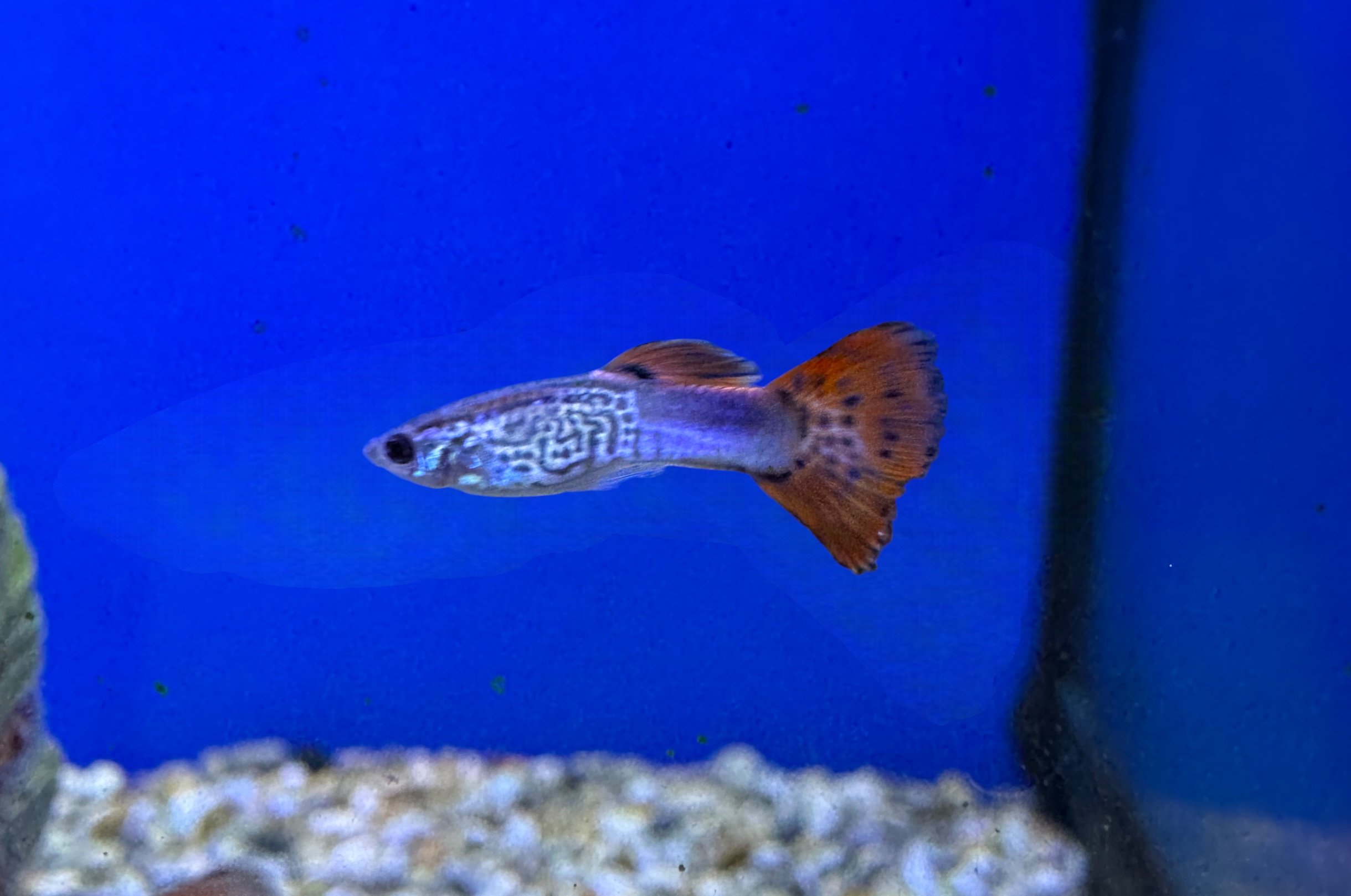 Image 1 of 1