Image 1 of 1
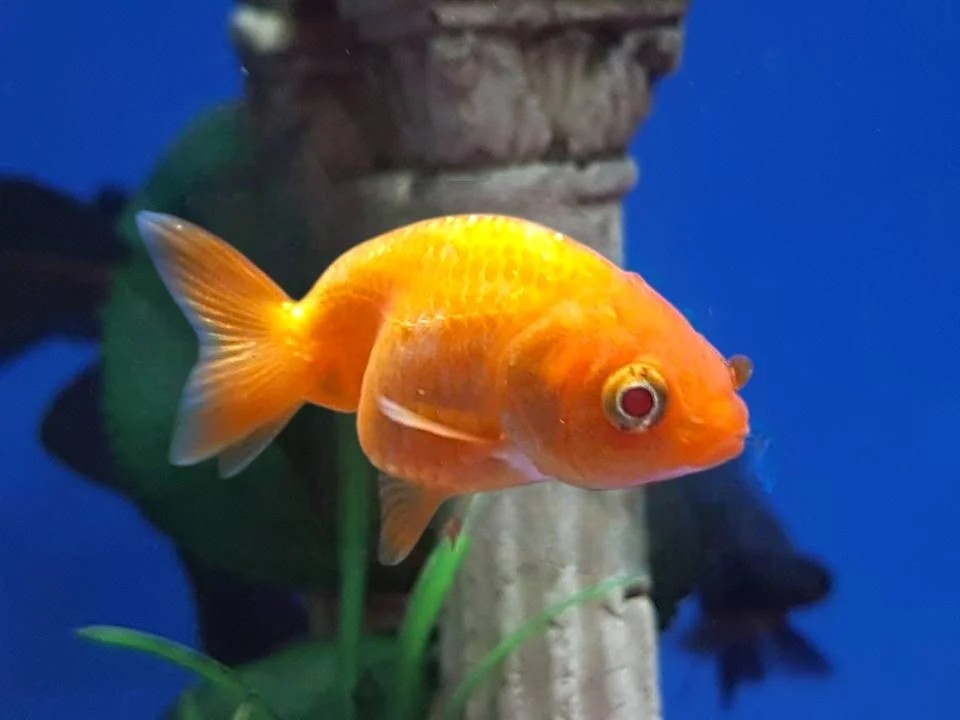
Black Moor Fancy Goldfish
Adult Size: Black Moors can grow to about 8 to 10 inches (20 to 25 cm) in length, though some may reach up to 12 inches (30 cm) in optimal conditions.
Temperature Range: 65°F to 75°F (18°C to 24°C). They can tolerate a wider range but prefer cooler temperatures.
pH Range: 6.5 to 8.0
Compatibility: Generally peaceful and can be kept with other peaceful goldfish varieties. They do best with other slow-moving, long-finned goldfish like Lionheads, Ranchus, and Bubble Eyes.
Minimum Tank Size: 60 liters for a single fish, but a larger tank is highly recommended.
Originates from: China, where they were selectively bred from common goldfish.
Ideal Substrate: Fine gravel or sand, as they often forage at the bottom of the tank.
Ideal Tank Mates Suggestions:
Other Fancy Goldfish: Species like Lionheads, Ranchus, Bubble Eyes, and Orandas.
Peaceful Community Fish: Species that can handle cooler water temperatures and are not aggressive, such as White Cloud Mountain Minnows and some Danios.
Snails and Shrimp: Species like Mystery Snails and Amano Shrimp, which can help keep the tank clean.
Fish to Avoid:
Fast-Swimming Fish: Species like Goldfish Shubunkins or Comets, which can outcompete Black Moors for food.
Large Fish: Species that are much larger than the Black Moor can see them as prey or outcompete them for resources.
Additional Information:
Habitat and Tank Setup:
Water Flow: Black Moors prefer a gentle water flow. Avoid strong currents that can make it difficult for them to swim.
Decorations: Provide plenty of hiding spots with smooth rocks, driftwood, and non-toxic plants. Ensure that decorations do not have sharp edges that can damage their delicate fins and eyes.
Filtration: Use a high-quality filter to maintain water quality, but ensure it does not create too strong a current. Sponge filters are a good option as they are gentle and effective.
Diet:
Feeding Habits: Black Moors are omnivores and will eat a variety of foods. Offer a balanced diet that includes high-quality goldfish pellets, flakes, and occasional live or frozen foods like brine shrimp and bloodworms. Supplement their diet with blanched vegetables like peas.
Feeding Frequency: Feed them 2-3 times a day with small portions to avoid overfeeding and maintain water quality.
Behavior:
Activity Level: Black Moors are generally active but can be slower and more deliberate in their movements compared to other goldfish varieties. They enjoy exploring their environment and foraging for food.
Social Behavior: They are social and do best in groups. They can be shy initially but become more outgoing and interactive with regular care and a stable environment.
Breeding:
Breeding Difficulty: Breeding Black Moors can be challenging but is possible with the right conditions. They require a well-maintained tank with clean, cool water and a varied diet to encourage breeding.
Sexing: Males often develop breeding tubercles on their gill covers and pectoral fins during the breeding season, while females tend to have a rounder, fuller body.
Care Tips:
Water Quality: Maintain excellent water quality with regular water changes (20-30% weekly) and a strong filtration system. They are sensitive to poor water conditions and high levels of ammonia and nitrates.
Tank Maintenance: Regularly clean the tank and substrate to prevent the buildup of detritus and algae, which can affect water quality.
Acclimation: When introducing new Black Moor Goldfish to your tank, acclimate them slowly to avoid shock from sudden changes in water parameters.
Health Monitoring: Keep an eye on their health, especially their eyes. Their telescopic eyes can be prone to injury and infection, so a clean environment and gentle tank mates are crucial.
Unique Features:
Telescopic Eyes: The most distinctive feature of the Black Moor is its telescopic eyes, which are large and protrude from the head. This gives them a unique and somewhat comical appearance.
Coloration: As the name suggests, Black Moors are typically a deep, velvety black color. However, some may have a slight bronze or brownish tint.
Fantail: They have a double tail, which is broad and flowing, adding to their elegant appearance.
Tank Setup Recommendations:
Water Parameters: Keep the water temperature between 65°F and 75°F (18°C to 24°C) and the pH between 6.5 and 8.0.
Aeration: Ensure good aeration, as they require well-oxygenated water. An air stone or a gentle powerhead can help.
Lighting: Provide moderate lighting to encourage plant growth and maintain a natural day-night cycle. Avoid very bright lights, as they can stress the fish due to their sensitive eyes.
Heating: While they can tolerate cooler temperatures, a heater can help maintain a consistent temperature, especially in colder environments.