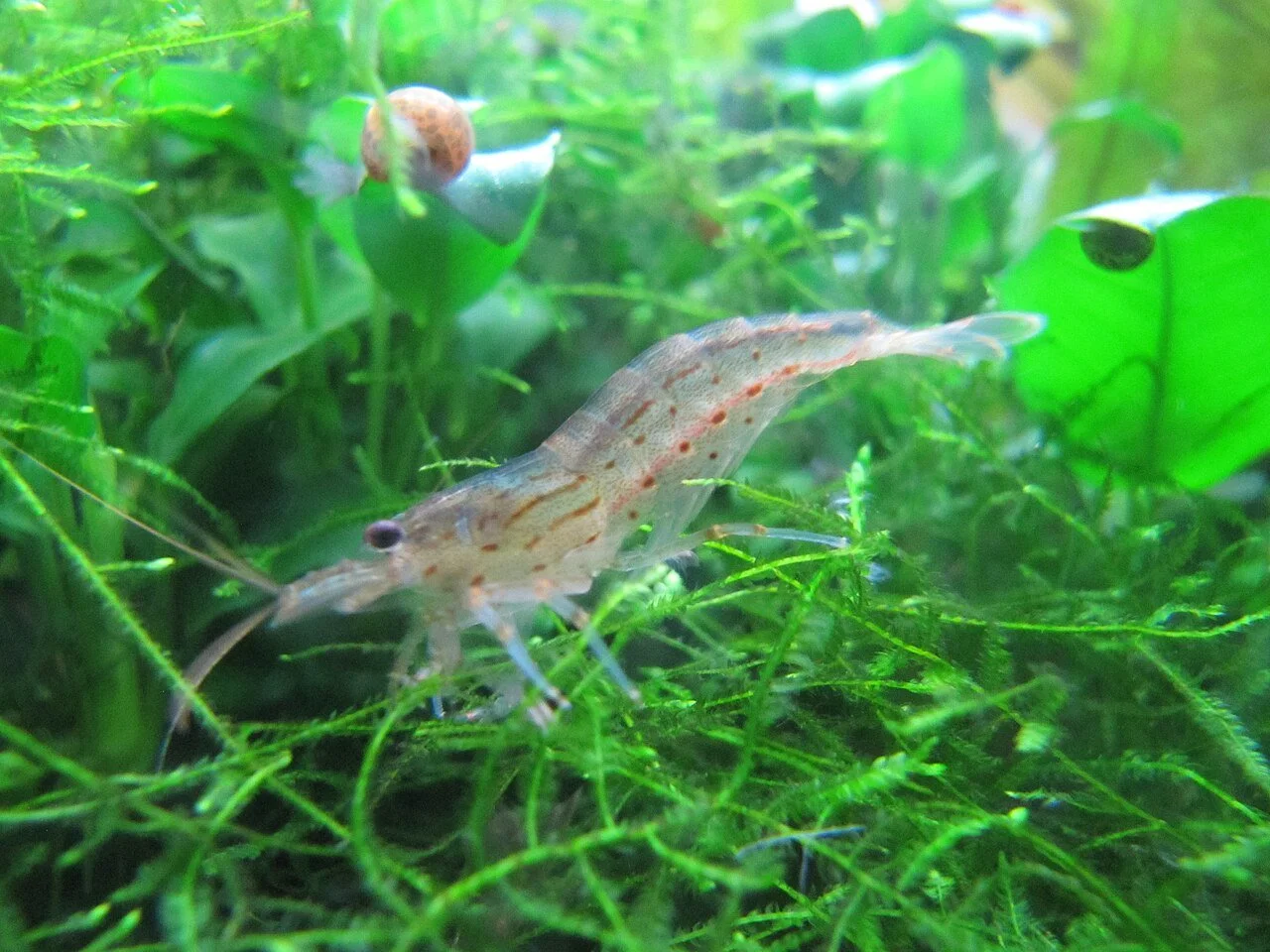
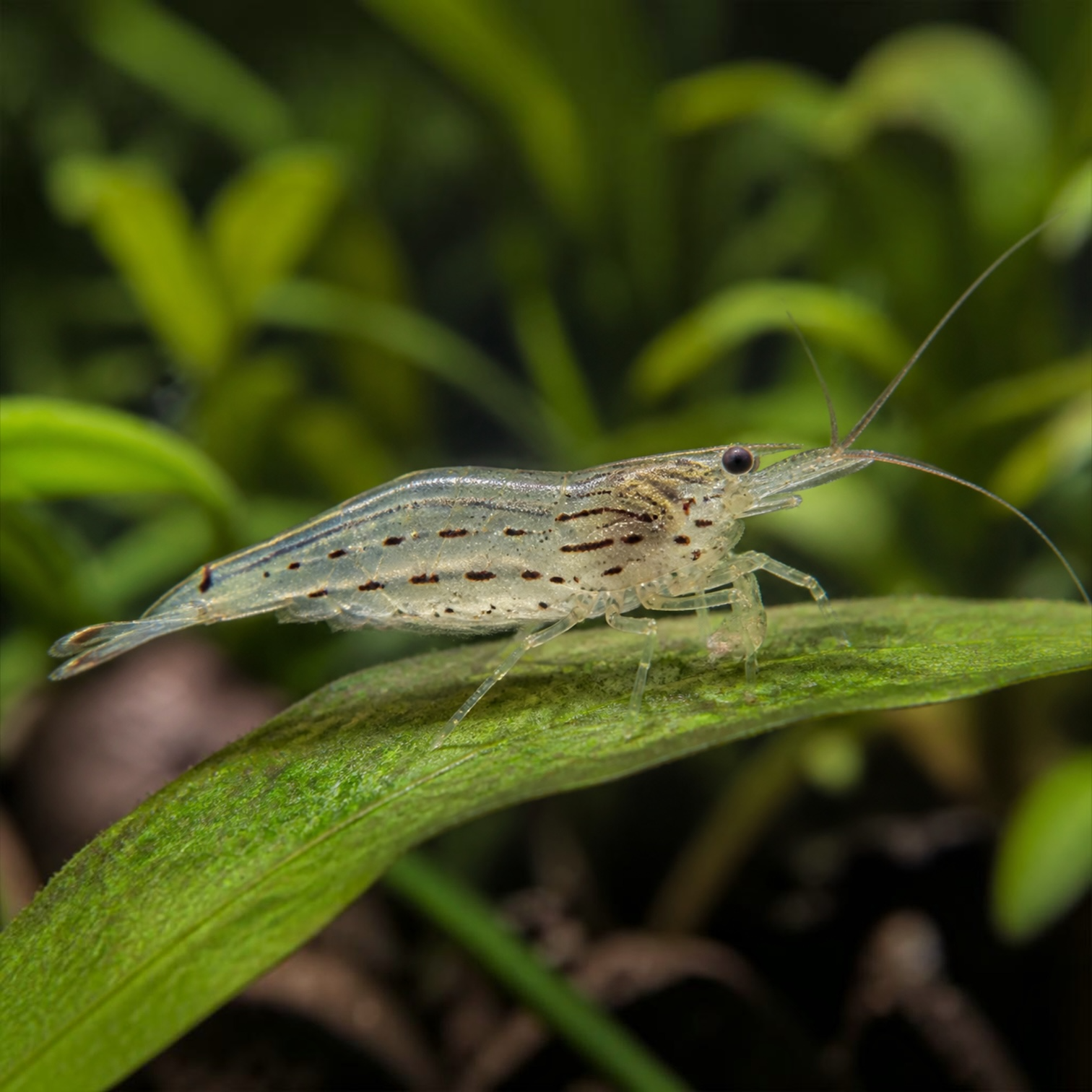
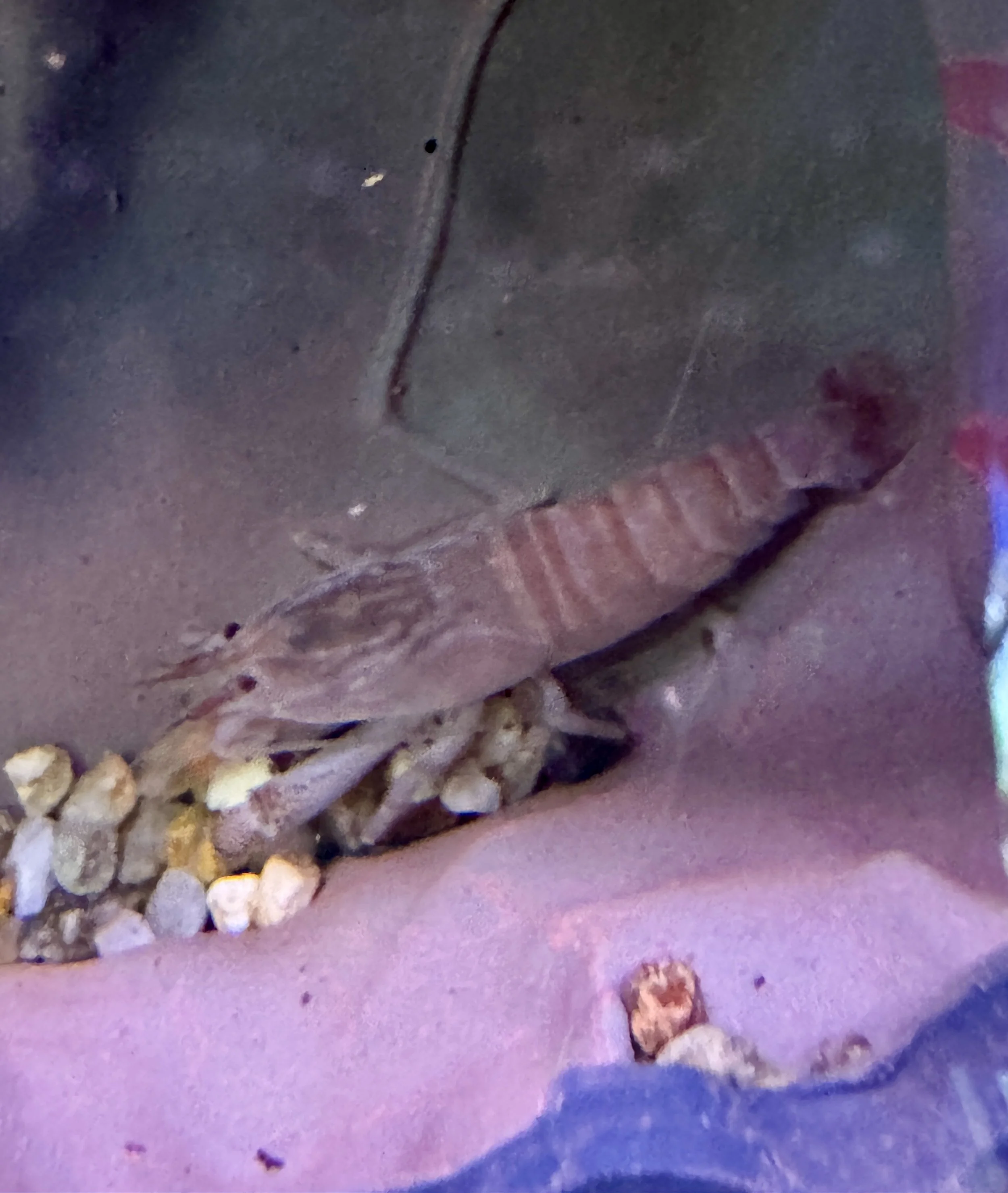
The Atyopsis moluccensis, commonly known as the Bamboo Shrimp, is a large freshwater shrimp native to the fast-flowing rivers and streams of Southeast Asia, including Indonesia, Thailand, Malaysia, the Philippines and Sri Lanka. It is also known as the Wood Shrimp, Fan Shrimp or Singapore Shrimp.
One of the most distinctive invertebrates in the hobby, the Bamboo Shrimp is a specialist filter feeder. Rather than grazing on surfaces like most aquarium shrimp, it positions itself in the current and extends its three pairs of large, feathery fan-like front appendages to sieve microscopic particles from the water flow. The body is mottled brown to reddish-brown with a pale cream stripe running along the back, and colouration can shift between brown, red-brown and sometimes orange depending on diet, mood and molting cycle. Growing to 8-10 centimetres, it is significantly larger than dwarf shrimp. Males tend to show richer, more saturated colour and have noticeably thicker, more prominent front legs than females.
A peaceful, gregarious shrimp that can be kept singly or in a group. It is completely docile and poses no threat to any tank mate, though it can be shy around fast-moving fish. The Bamboo Shrimp's defining requirement is water flow — it needs a moderate to strong current carrying suspended particles to feed on, and a mature, established aquarium with plenty of surface area. Provide driftwood, rocks and plants as perches directly in the flow where it can anchor and filter feed. Like all shrimp, it is sensitive to copper and poor water quality; ammonia and nitrite must read zero, and any detectable copper is lethal. Breeding is not practical in the home aquarium as the larvae require brackish water to develop.
Merits
The Bamboo Shrimp brings something genuinely different to a freshwater aquarium. Its filter-feeding behaviour — perching in the current and rhythmically waving its fan-like appendages to catch passing particles — is one of the most fascinating behaviours to watch in the invertebrate hobby, It is completely peaceful and plant-safe, and at its adult size it is large enough to hold its own alongside most community fish where smaller shrimp would be at risk. It also serves a useful purpose by helping to clear fine suspended particles and microalgae from the water column, complementing rather than competing with surface-grazing shrimp and algae-eating fish. For a planted aquarium with decent flow, the Bamboo Shrimp adds both movement and function that few other invertebrates can match.
Diet
A filter feeder that eats suspended microscopic particles from the water column, including microalgae, biofilm and fine organic matter. In a well-established tank with natural particulates it may find enough food on its own, but in clean, well-filtered tanks it will need supplemental feeding. Offer powdered fry food, finely ground flake, liquid or powdered phytoplankton, or finely crushed algae wafers whisked into the water near the shrimp so the fans have something to catch. A shrimp that stops fanning and starts picking at the substrate is usually hungry — feed accordingly.
The Atyopsis moluccensis, commonly known as the Bamboo Shrimp, is a large freshwater shrimp native to the fast-flowing rivers and streams of Southeast Asia, including Indonesia, Thailand, Malaysia, the Philippines and Sri Lanka. It is also known as the Wood Shrimp, Fan Shrimp or Singapore Shrimp.
One of the most distinctive invertebrates in the hobby, the Bamboo Shrimp is a specialist filter feeder. Rather than grazing on surfaces like most aquarium shrimp, it positions itself in the current and extends its three pairs of large, feathery fan-like front appendages to sieve microscopic particles from the water flow. The body is mottled brown to reddish-brown with a pale cream stripe running along the back, and colouration can shift between brown, red-brown and sometimes orange depending on diet, mood and molting cycle. Growing to 8-10 centimetres, it is significantly larger than dwarf shrimp. Males tend to show richer, more saturated colour and have noticeably thicker, more prominent front legs than females.
A peaceful, gregarious shrimp that can be kept singly or in a group. It is completely docile and poses no threat to any tank mate, though it can be shy around fast-moving fish. The Bamboo Shrimp's defining requirement is water flow — it needs a moderate to strong current carrying suspended particles to feed on, and a mature, established aquarium with plenty of surface area. Provide driftwood, rocks and plants as perches directly in the flow where it can anchor and filter feed. Like all shrimp, it is sensitive to copper and poor water quality; ammonia and nitrite must read zero, and any detectable copper is lethal. Breeding is not practical in the home aquarium as the larvae require brackish water to develop.
Merits
The Bamboo Shrimp brings something genuinely different to a freshwater aquarium. Its filter-feeding behaviour — perching in the current and rhythmically waving its fan-like appendages to catch passing particles — is one of the most fascinating behaviours to watch in the invertebrate hobby, It is completely peaceful and plant-safe, and at its adult size it is large enough to hold its own alongside most community fish where smaller shrimp would be at risk. It also serves a useful purpose by helping to clear fine suspended particles and microalgae from the water column, complementing rather than competing with surface-grazing shrimp and algae-eating fish. For a planted aquarium with decent flow, the Bamboo Shrimp adds both movement and function that few other invertebrates can match.
Diet
A filter feeder that eats suspended microscopic particles from the water column, including microalgae, biofilm and fine organic matter. In a well-established tank with natural particulates it may find enough food on its own, but in clean, well-filtered tanks it will need supplemental feeding. Offer powdered fry food, finely ground flake, liquid or powdered phytoplankton, or finely crushed algae wafers whisked into the water near the shrimp so the fans have something to catch. A shrimp that stops fanning and starts picking at the substrate is usually hungry — feed accordingly.

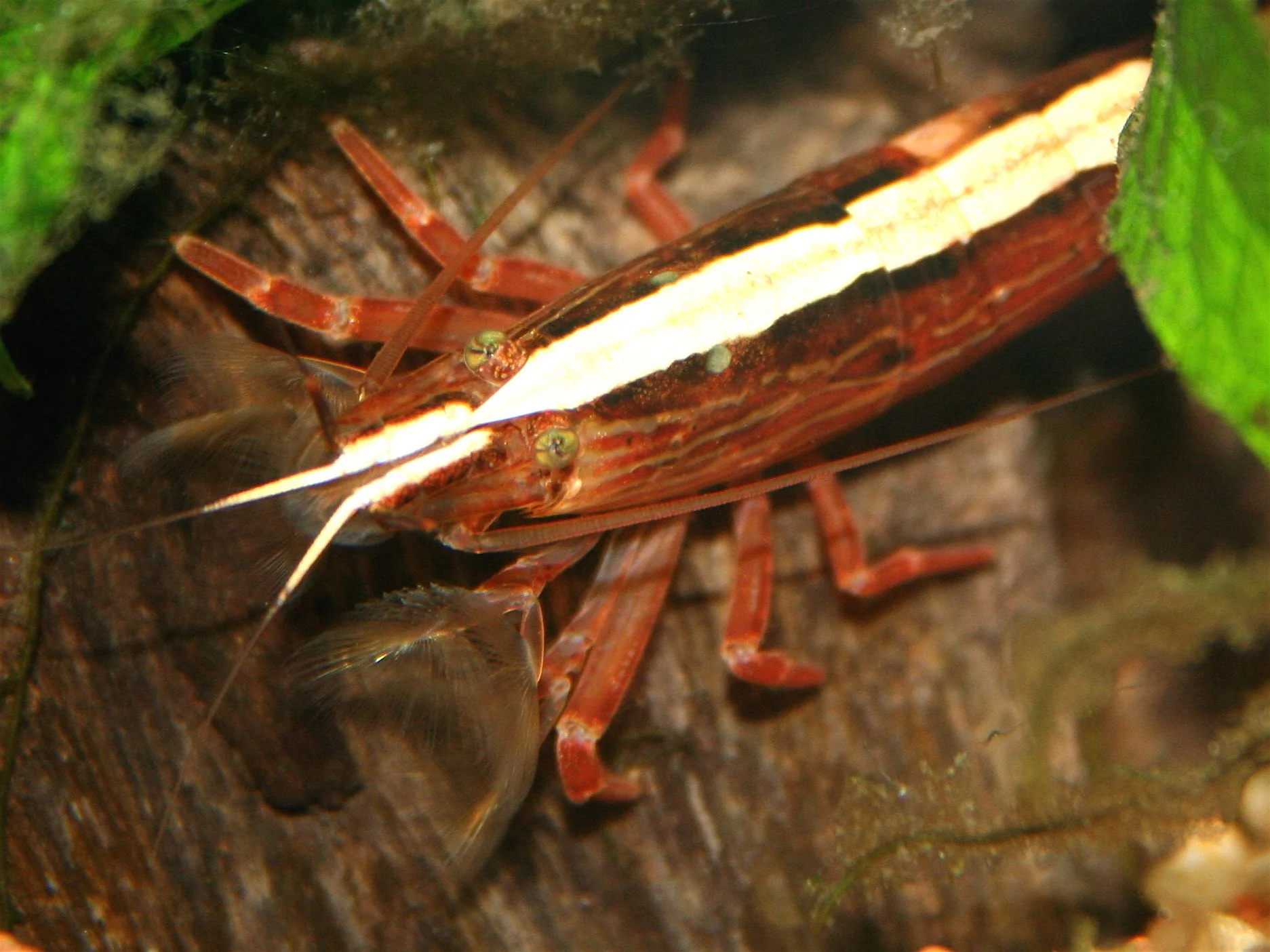 Image 1 of 2
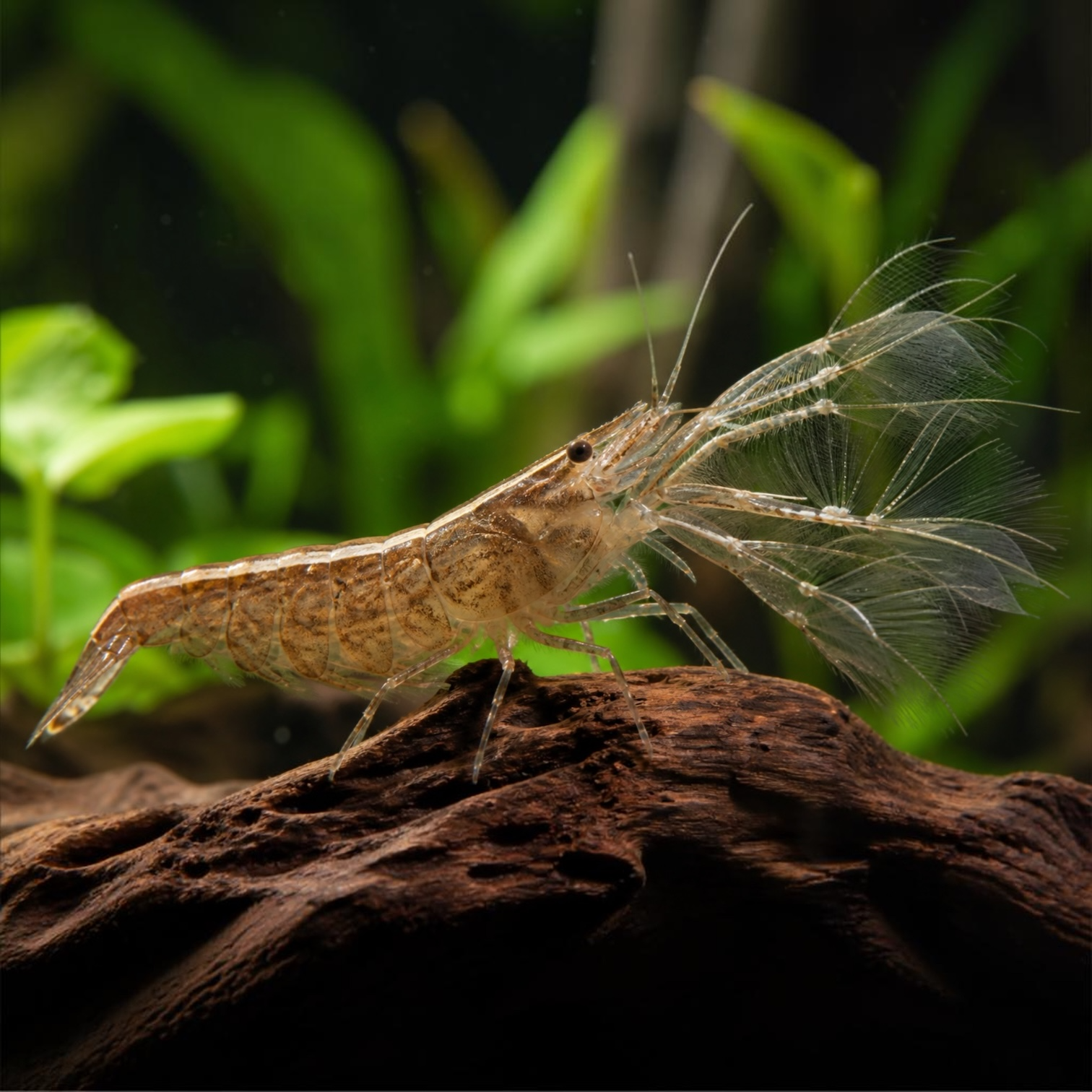 Image 2 of 2