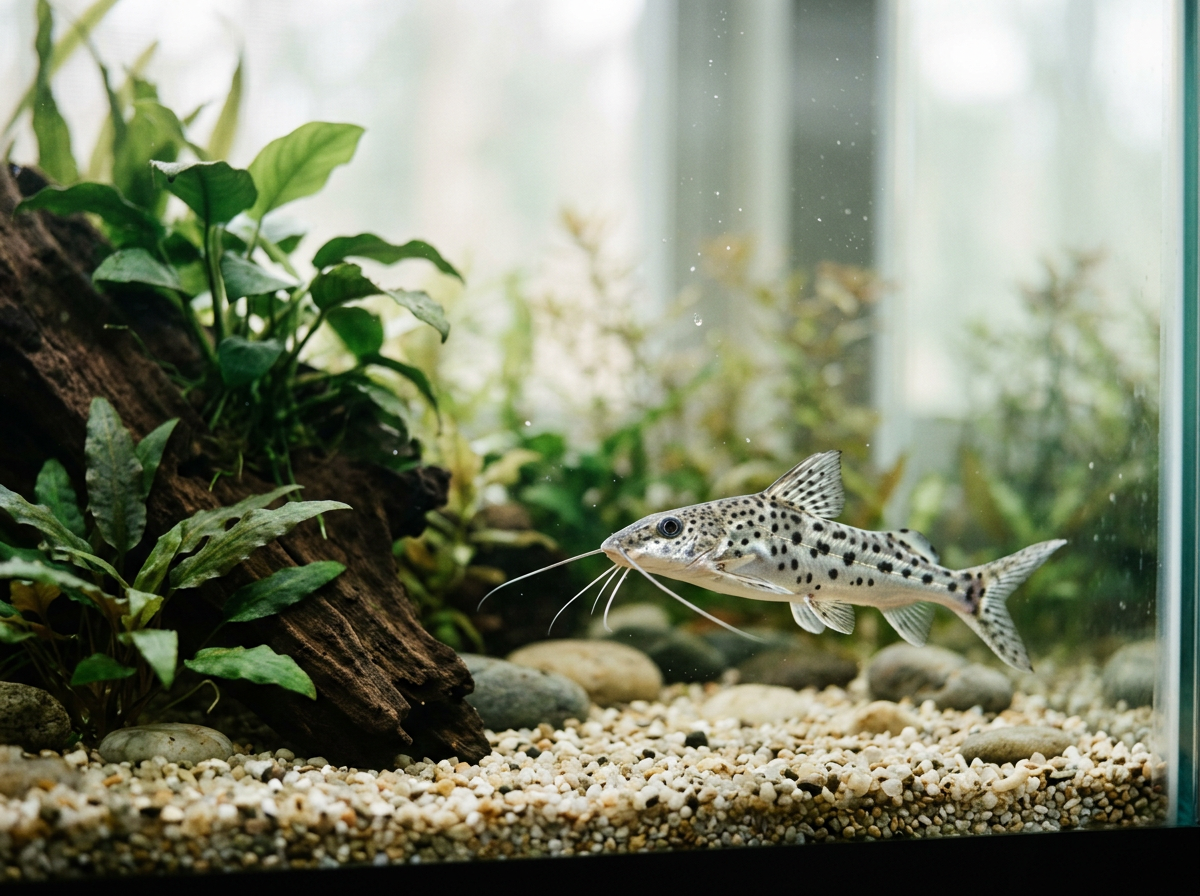
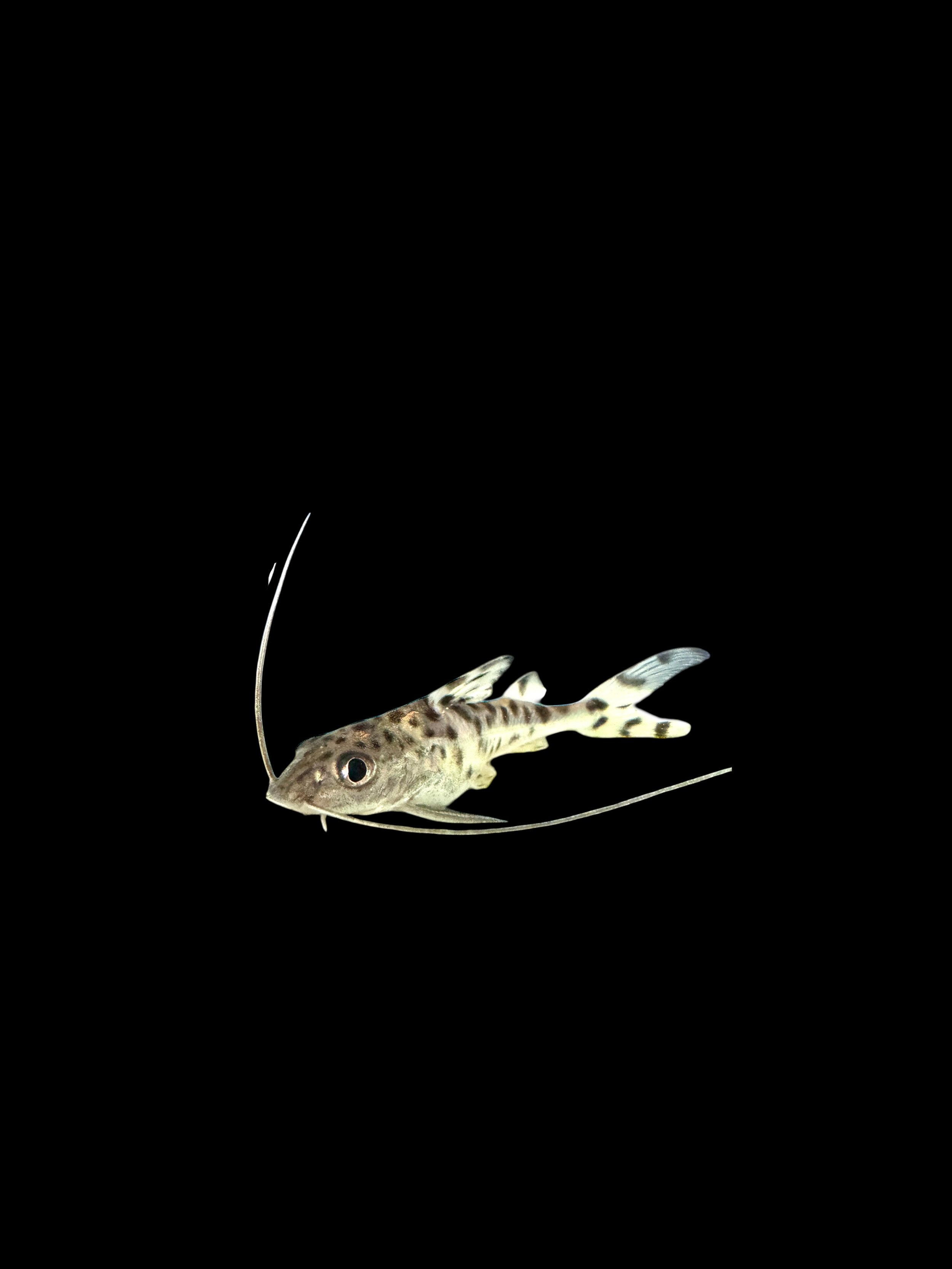
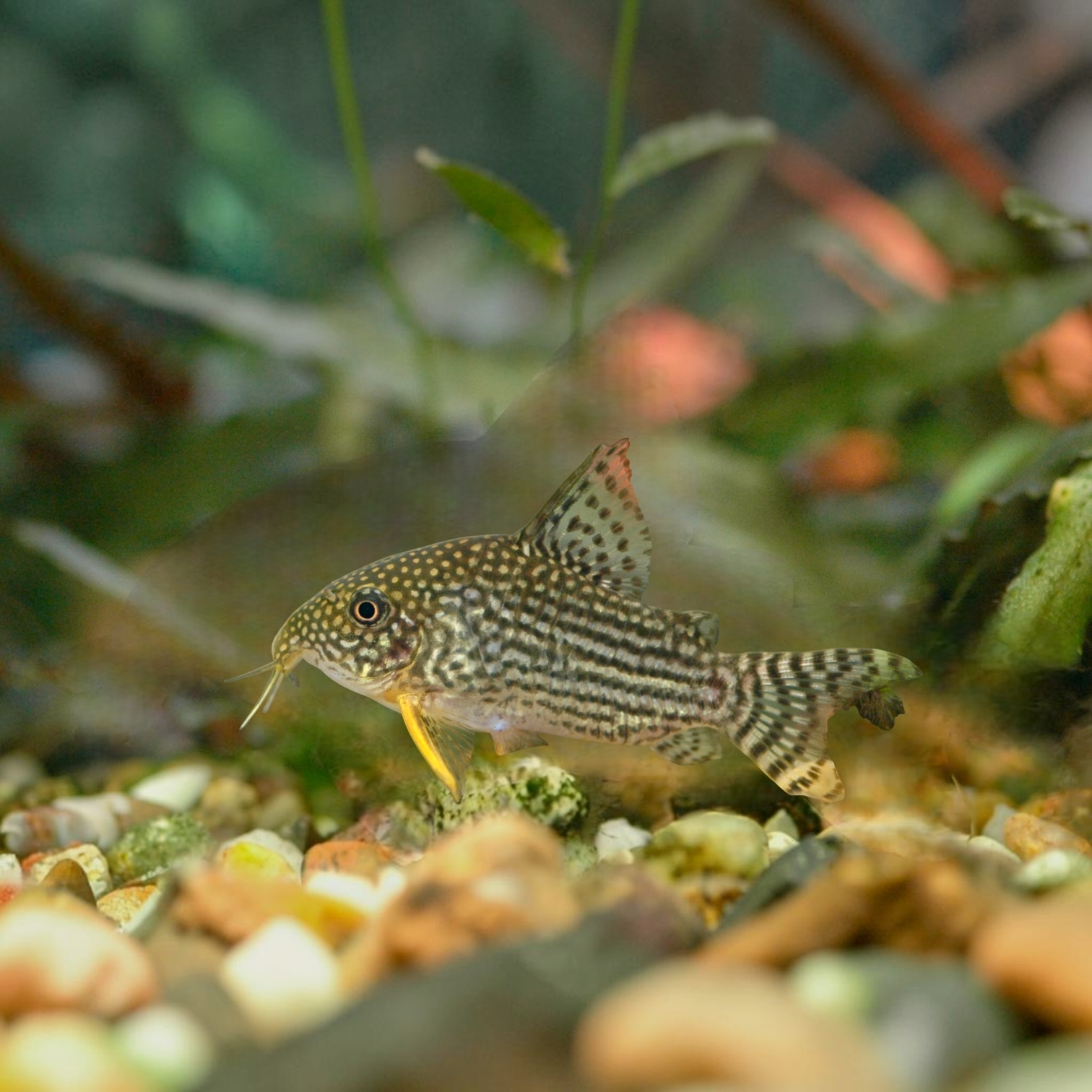
The Corydoras julii, commonly known as the Julii Cory or Leopard Cory, is a small freshwater armoured catfish native to the lower Amazon basin and coastal river drainages of northeastern Brazil, particularly the Parnaíba River system. It inhabits slow-moving, shallow tributaries and creeks with sandy substrates and leaf litter.
A peaceful, social, shoaling fish that must be kept in groups of at least six. Lone specimens become shy and stressed, whereas a group will be bold, active and entertaining to watch as they forage together across the substrate, often moving in a synchronised line. They occupy the bottom level of the aquarium and use their barbels to root through sand in search of food. A soft, fine sandy substrate is essential — sharp gravel damages their barbels and leads to infection. They are sensitive to salt and many copper-based medications, so caution is needed when treating the tank.
Merits
The Julii Cory combines delicate, intricate patterning with a genuinely useful role in the aquarium. The fine black spotting on a silvery body gives it a leopard-like appearance that stands out beautifully against a dark or planted background, and a large group foraging together in a line is one of the more engaging sights in a community tank. It is hardy, beginner-friendly and long-lived with good care, and captive-bred specimens adapt well to a range of water conditions. Like all corys, it helps clean up leftover food that reaches the bottom, reducing waste and keeping the substrate tidy. Its constant, comical foraging behaviour and schooling antics give a tank real character at the bottom level, where many community tanks are otherwise empty. For anyone wanting an attractive, active and practical bottom-dweller, the Julii Cory is an excellent choice.
Diet
An omnivorous and unfussy feeder. Offer high-quality sinking pellets or wafers as a staple, supplemented regularly with live and frozen foods such as bloodworms, brine shrimp, daphnia and tubifex. In a community tank, make sure food reaches the bottom — faster, more aggressive feeders at the surface can outcompete corys, so target feeding with sinking foods is important.
The Corydoras julii, commonly known as the Julii Cory or Leopard Cory, is a small freshwater armoured catfish native to the lower Amazon basin and coastal river drainages of northeastern Brazil, particularly the Parnaíba River system. It inhabits slow-moving, shallow tributaries and creeks with sandy substrates and leaf litter.
A peaceful, social, shoaling fish that must be kept in groups of at least six. Lone specimens become shy and stressed, whereas a group will be bold, active and entertaining to watch as they forage together across the substrate, often moving in a synchronised line. They occupy the bottom level of the aquarium and use their barbels to root through sand in search of food. A soft, fine sandy substrate is essential — sharp gravel damages their barbels and leads to infection. They are sensitive to salt and many copper-based medications, so caution is needed when treating the tank.
Merits
The Julii Cory combines delicate, intricate patterning with a genuinely useful role in the aquarium. The fine black spotting on a silvery body gives it a leopard-like appearance that stands out beautifully against a dark or planted background, and a large group foraging together in a line is one of the more engaging sights in a community tank. It is hardy, beginner-friendly and long-lived with good care, and captive-bred specimens adapt well to a range of water conditions. Like all corys, it helps clean up leftover food that reaches the bottom, reducing waste and keeping the substrate tidy. Its constant, comical foraging behaviour and schooling antics give a tank real character at the bottom level, where many community tanks are otherwise empty. For anyone wanting an attractive, active and practical bottom-dweller, the Julii Cory is an excellent choice.
Diet
An omnivorous and unfussy feeder. Offer high-quality sinking pellets or wafers as a staple, supplemented regularly with live and frozen foods such as bloodworms, brine shrimp, daphnia and tubifex. In a community tank, make sure food reaches the bottom — faster, more aggressive feeders at the surface can outcompete corys, so target feeding with sinking foods is important.

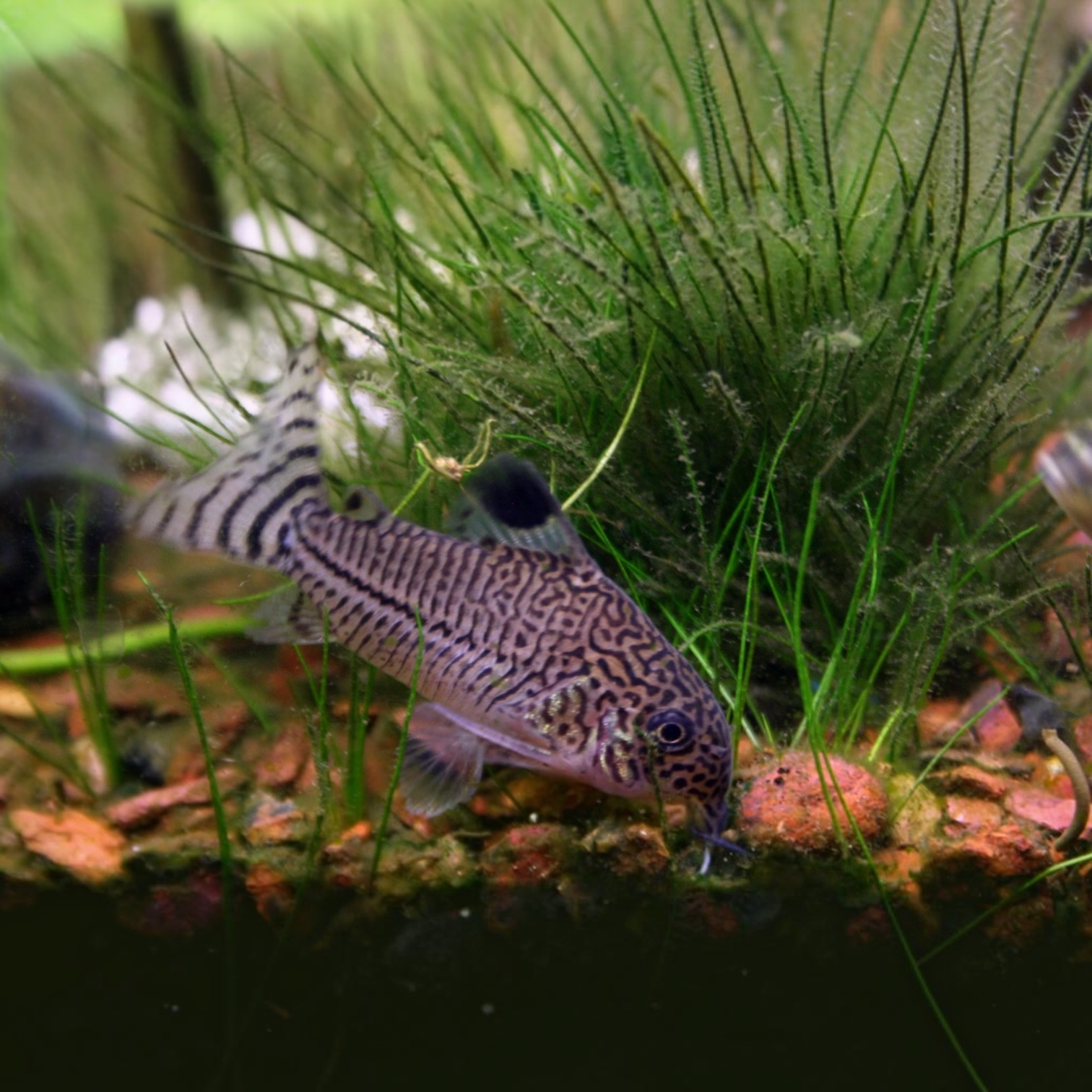 Image 1 of 1