Poll's Synodontis - Synodontis polli

£6.99
Named in honour of Belgian ichthyologist Dr Max Poll, this striking Tanganyikan catfish is prized for its bold mottled patterning and peaceful, bottom-roaming nature. An ideal addition to a hard-water rift lake community, Poll's synodontis brings character and activity to the lower levels of the aquarium.
About Poll's Synodontis

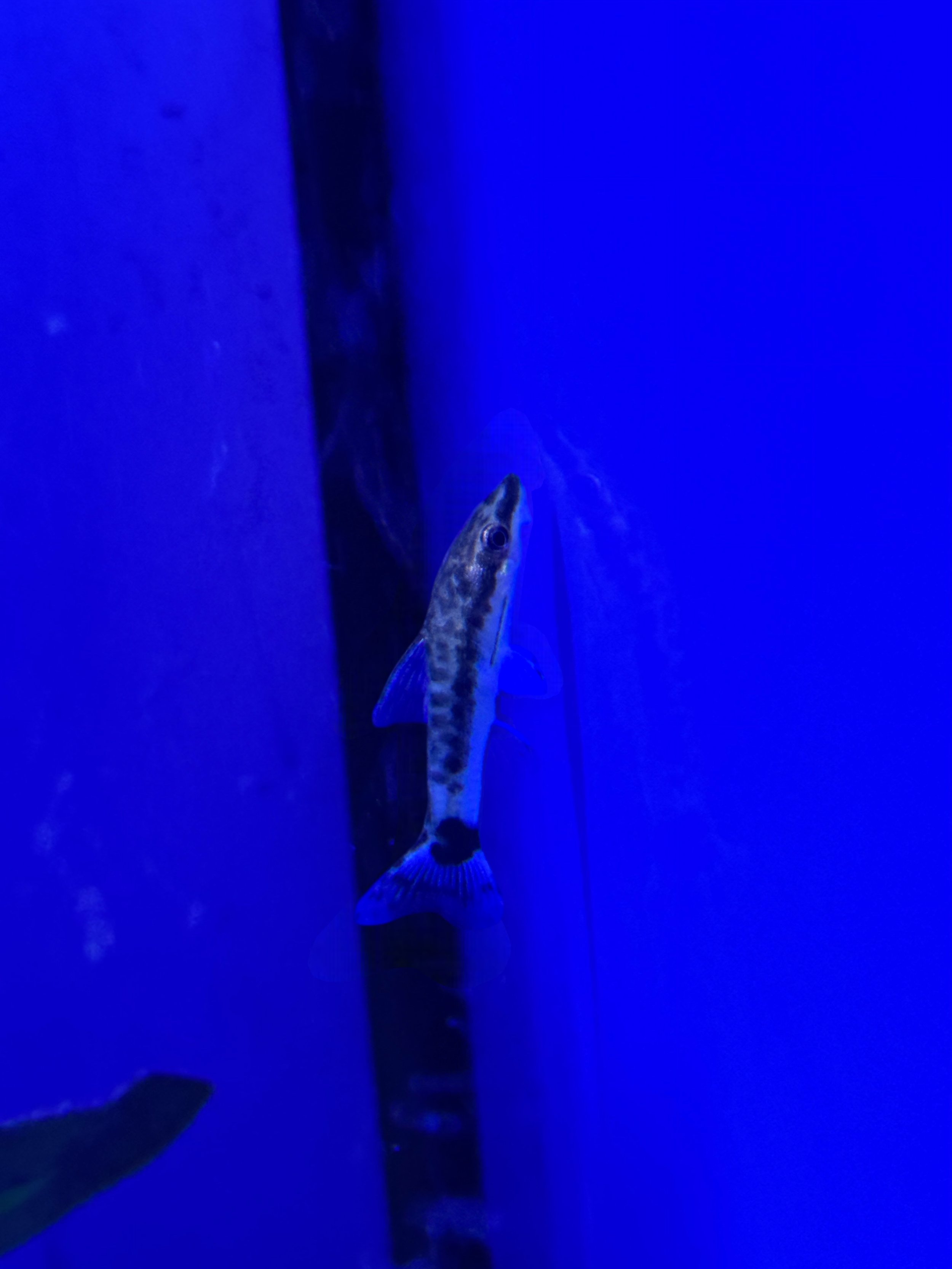
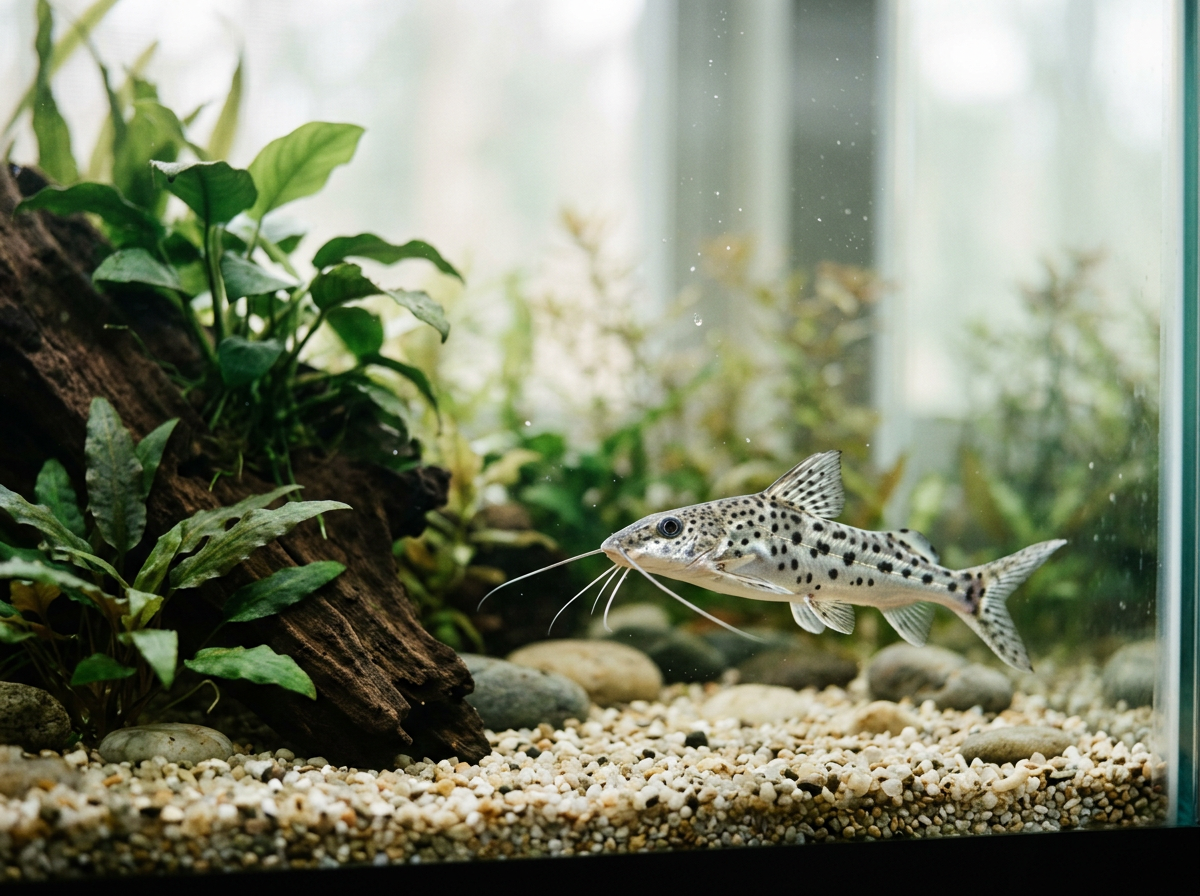
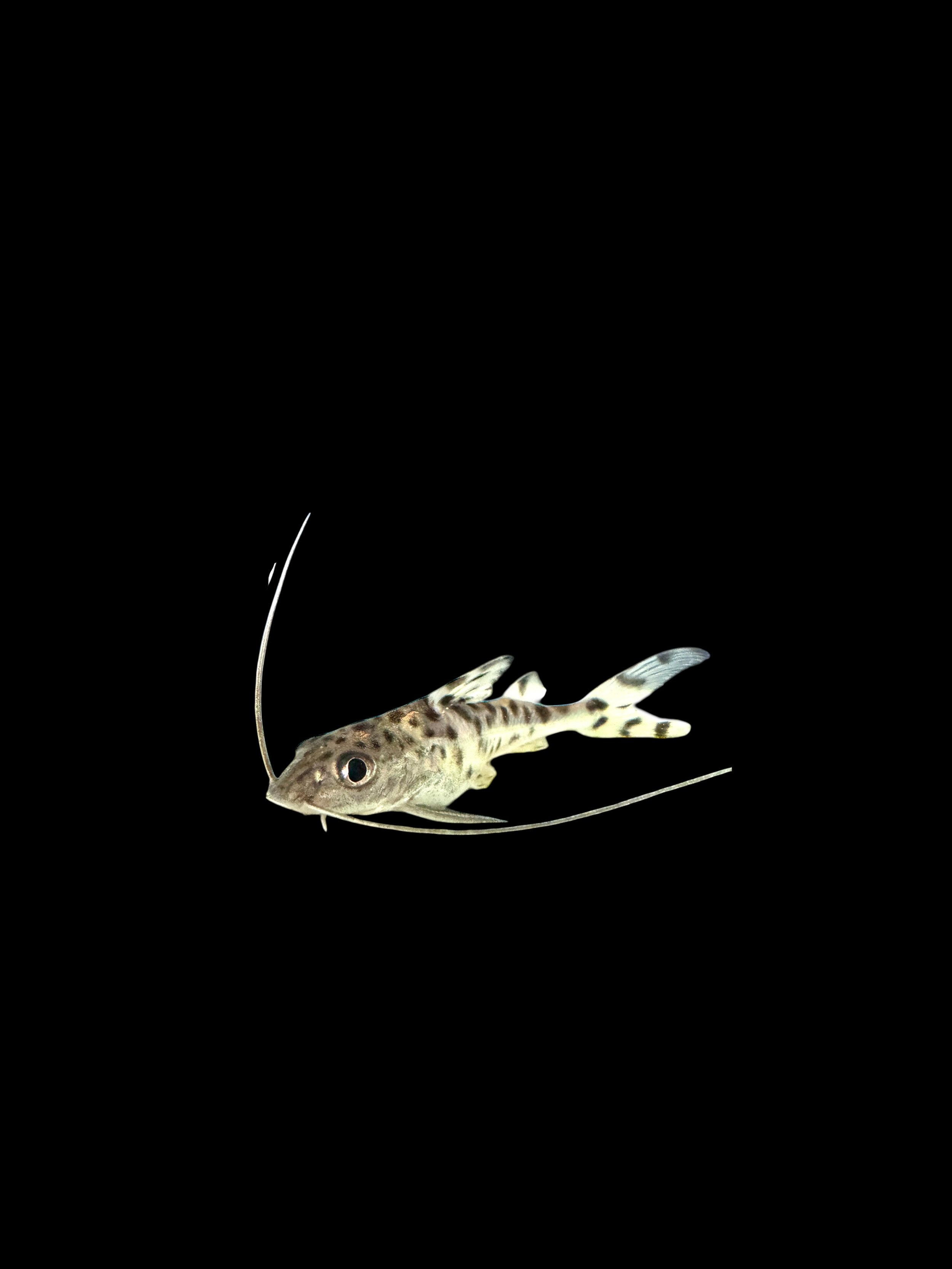
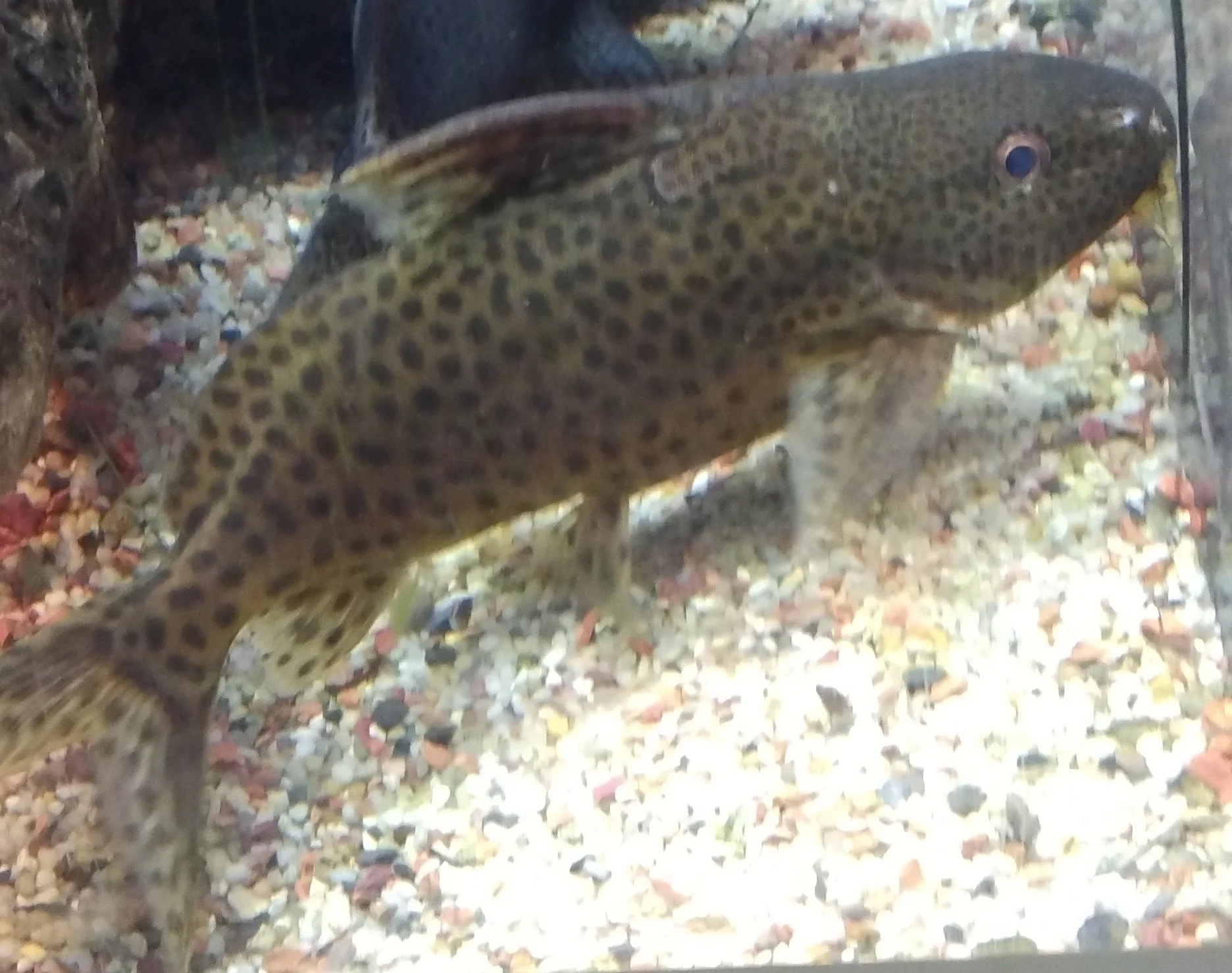
Poll's synodontis is a charming and largely peaceful catfish endemic to Lake Tanganyika in East Africa. In the wild it inhabits rocky littoral shores and muddy lake bottoms at depths of up to 20 metres, where light is dim and the water is hard, alkaline, and very stable. It is easily recognised by its distinctive mottled pattern of dark brown and creamy golden patches, large eyes, a high triangular dorsal fin with a sharp spine, and the whisker-like barbels typical of the genus.

Unlike some of its relatives, S. polli has a strong preference for meaty foods and will largely ignore vegetable offerings such as cucumber or zucchini — a useful distinction from species like S. petricola and S. multipunctatus. It readily accepts sinking pellets, frozen bloodworm, and live foods, and benefits from the occasional addition of meatier items such as prawns and mussels.

Mostly peaceful and social, it does well in a small group and can be kept with other African Rift Lake catfish and cichlids, large tetras, and large barbs, provided tank mates are not overly aggressive. Some initial territorial bickering may occur as new fish settle, particularly among males.
Named in honour of Belgian ichthyologist Dr Max Poll, this striking Tanganyikan catfish is prized for its bold mottled patterning and peaceful, bottom-roaming nature. An ideal addition to a hard-water rift lake community, Poll's synodontis brings character and activity to the lower levels of the aquarium.
About Poll's Synodontis

Poll's synodontis is a charming and largely peaceful catfish endemic to Lake Tanganyika in East Africa. In the wild it inhabits rocky littoral shores and muddy lake bottoms at depths of up to 20 metres, where light is dim and the water is hard, alkaline, and very stable. It is easily recognised by its distinctive mottled pattern of dark brown and creamy golden patches, large eyes, a high triangular dorsal fin with a sharp spine, and the whisker-like barbels typical of the genus.

Unlike some of its relatives, S. polli has a strong preference for meaty foods and will largely ignore vegetable offerings such as cucumber or zucchini — a useful distinction from species like S. petricola and S. multipunctatus. It readily accepts sinking pellets, frozen bloodworm, and live foods, and benefits from the occasional addition of meatier items such as prawns and mussels.

Mostly peaceful and social, it does well in a small group and can be kept with other African Rift Lake catfish and cichlids, large tetras, and large barbs, provided tank mates are not overly aggressive. Some initial territorial bickering may occur as new fish settle, particularly among males.

Scientific Name: Synodontis polli (Gosse, 1982) Common Name: Poll's Synodontis, Poll's Syno, White Polli Family: Mochokidae (upside-down catfishes) Origin: Endemic to Lake Tanganyika, East Africa — rocky littoral coasts down to ~20 m depth Size: Up to 6 inches (15 cm); ~18 cm (7 in) total length reported Lifespan: 5–10 years Diet: Omnivore with a strong preference for meaty foods; sinking pellets, frozen bloodworm, live foods, prawns and mussels. Will not eat vegetables. Temperament: Mostly peaceful and social; can be mildly territorial with other bottom catfish while establishing territories. Best kept in a small group. Water Parameters: • Temperature: 75–82°F (24–28°C) • pH: 7.5–8.5 • Hardness: 15–35 dGH Tank Size: Minimum 50 gallons (190 L) for a single fish; 55+ gallons for a group of four or five Compatibility: Best with other hard-water Rift Lake species — mouthbrooding Tanganyikan cichlids, suitably sized rainbowfish and livebearers. Avoid fish small enough to be eaten and overly aggressive tank mates. Habitat / Setup: Lake Tanganyika biotope — fine sandy substrate, piled rockwork forming caves, open swimming space, and dim lighting to mimic its natural muddy-bottom habitat.